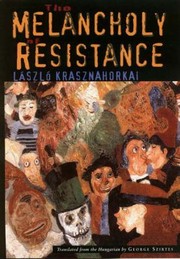
A powerful, surreal novel, in the tradition of Gogol, about the chaotic events surrounding the arrival of a circus in a small Hungarian town. The Melancholy of Resistance, László Krasznahorkai's magisterial, surreal novel, depicts a chain of mysterious events in a small Hungarian town. A circus, promising to display the stuffed body of the largest whale in the world, arrives in the dead of winter, prompting bizarre rumors. Word spreads that the circus folk have a sinister purpose in mind, and the frightened citizens cling to any manifestation of order they can find music, cosmology, fascism. The novel's characters are unforgettable: the evil Mrs. Eszter, plotting her takeover of the town; her weakling husband; and Valuska, our hapless hero with his head in the clouds, who is the tender center of the book, the only pure and noble soul to be found. Compact, powerful and intense, The Melancholy of …
A powerful, surreal novel, in the tradition of Gogol, about the chaotic events surrounding the arrival of a circus in a small Hungarian town. The Melancholy of Resistance, László Krasznahorkai's magisterial, surreal novel, depicts a chain of mysterious events in a small Hungarian town. A circus, promising to display the stuffed body of the largest whale in the world, arrives in the dead of winter, prompting bizarre rumors. Word spreads that the circus folk have a sinister purpose in mind, and the frightened citizens cling to any manifestation of order they can find music, cosmology, fascism. The novel's characters are unforgettable: the evil Mrs. Eszter, plotting her takeover of the town; her weakling husband; and Valuska, our hapless hero with his head in the clouds, who is the tender center of the book, the only pure and noble soul to be found. Compact, powerful and intense, The Melancholy of Resistance, as its enormously gifted translator George Szirtes puts it, "is a slow lava flow of narrative, a vast black river of type." And yet, miraculously, the novel, in the words of The Guardian, "lifts the reader along in lunar leaps and bounds."
Really interesting. Hadn't read any Krasznahorkai before this.
The format works for the looming dread and general atmosphere. Really liked some of the longer diatribes and pieces of things like Mr. Eszter's hyper-awareness of the hammer and nail, followed by this being intruded on for pages upon pages by his neighbors terrified recounting of the initial descent of the military on the town.
I will be happy to get back to something with paragraph breaks, though!
Lecture éreintante, c'est le moins que l'on puisse dire. Le flot ininterrompu de mots nous plonge dans une étrange apnée littéraire où le lecteur peine à prendre son souffle. Quant à l'univers dans lequel nous sommes plongés, un mélange de nihilisme et de renoncement du poétique devant l'implacable rouleau compresseur du matérialisme et du cynisme, nous ne pouvons que, nous aussi, nous avouer vaincus. La Mélancolie de la Résistance représente à mes yeux ce que nombre d'entre eux éprouvaient après l'effondrement : fin d'une idéologie, guerre mondiale, sortie des camps... une humanité qui se sera perdue dans l'abject et l’indicible folie humaine. Réveil difficile.
Ma lecture achevée, je ne peux que constater le sentiment d'avoir ici affaire à un grand roman, de ceux qui prouvent que l'écriture peut dire du réel et que nul autre pinceau que celui de l'Art ne peut exprimer.