
-
3 estrellas
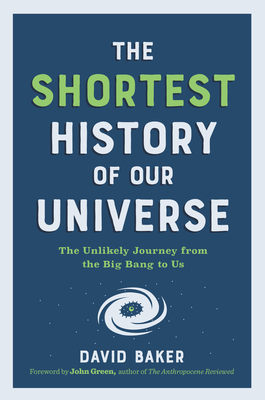
Title feels like a bit of a misnomer; while the beginning and end focus on cosmology from the Big Bang to the Heat Death of the Universe (what I thought the entirety of this book would be about), the middle 50% or so focuses on earth specifically. Maybe, "The Shortest History of Our Universe: Earth Edition!" didn't test as well with marketing groups.
The math and the dimensions of the early universe are always crazy to wrap my head around. What do you mean the universe was the size of a grapefruit 10^-35 seconds after the Big Bang, and then grew to 10 light years wide within the first 10 seconds?! I love this stuff. The explanations of how stars and galaxies form are great as well.
We also get a good walk-through of the formation of our solar system and all the epochs that earth specifically went through to …
Title feels like a bit of a misnomer; while the beginning and end focus on cosmology from the Big Bang to the Heat Death of the Universe (what I thought the entirety of this book would be about), the middle 50% or so focuses on earth specifically. Maybe, "The Shortest History of Our Universe: Earth Edition!" didn't test as well with marketing groups.
The math and the dimensions of the early universe are always crazy to wrap my head around. What do you mean the universe was the size of a grapefruit 10^-35 seconds after the Big Bang, and then grew to 10 light years wide within the first 10 seconds?! I love this stuff. The explanations of how stars and galaxies form are great as well.
We also get a good walk-through of the formation of our solar system and all the epochs that earth specifically went through to get to its current configuration, but I couldn't help but feel that the entirety of human history was given too much attention (a sentence I never thought I'd type). I get not wanting to leave stuff out, but I wasn't expecting this much of an anthropological and historical detour in the middle of what I thought was going to be a physics and astronomy book. Also an odd fixation on repeatedly mentioning how indigenous people in the Americas and Australia were wiped out by Afro-Eurasian diseases during waves of colonization, as if that was a defining moment of the entirety of the human existence.
But it brought me back in again with speculating on what the literal end of the universe might look like. Does it eventually burn itself out and everything goes dark and quiet? Will expansion eventually slow, reverse, and result in a Big Crunch? Will some hyper-advanced society figure out how to violate the Second Law of Thermodynamics to keep the lights on? Who knows, but it's fun to think about.