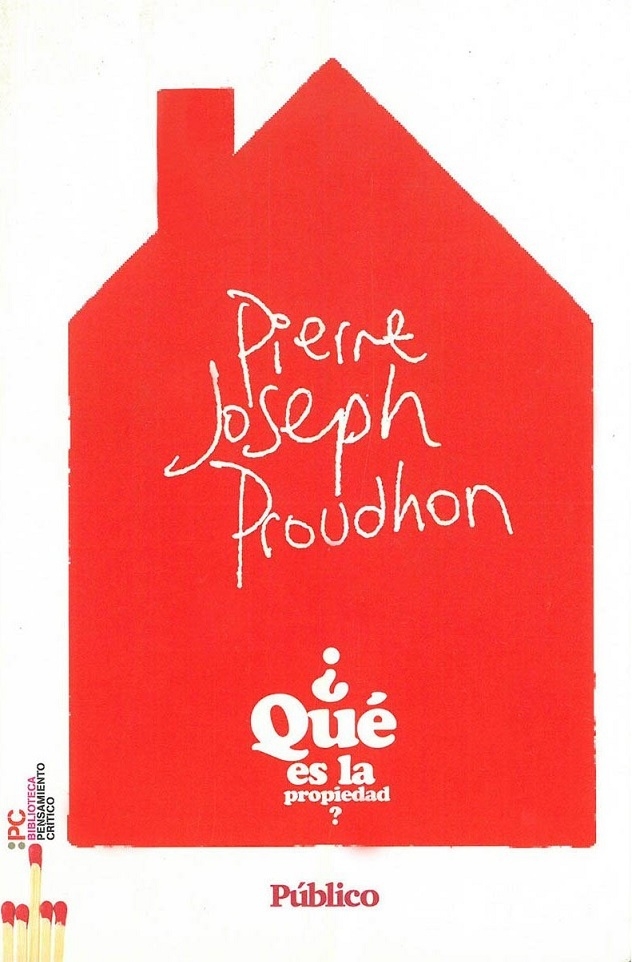

Pues la propiedad es un robo
3 estrellas
Texto relativamente complicado. Utiliza argumentos enrevesados para conclusiones relativamente obivas. Mezcla argumentario proveniente de la moral y ética del evangelio con la "rigurosidad" del derecho del siglo XIX, pasando por muchas otras fuentes, confundiendo sistemáticamente qué es ciencia, qué es dogma y qué son principios (como no era extraño que ocurriese en la ciencias sociales de aquella época como bien pone de manifiesto la escala teleológica de las ciencias de Augusto Compte).
Pese a ello, las conclusiones a las que llega son inapelables porque, pese a partir del marco legal de la época e igualar dogma religioso a principio científico, parte de la base de la libertad e igualdad como principios éticos innegociables. Un pequeño resumen de su ideario sería el siguiente:
I) distinguir propiedad de posesión, siendo la primera perdurable y acumulable, y por tanto, desigual e injusta, y la segunda todo lo contrario (la posesión sería como un …
Texto relativamente complicado. Utiliza argumentos enrevesados para conclusiones relativamente obivas. Mezcla argumentario proveniente de la moral y ética del evangelio con la "rigurosidad" del derecho del siglo XIX, pasando por muchas otras fuentes, confundiendo sistemáticamente qué es ciencia, qué es dogma y qué son principios (como no era extraño que ocurriese en la ciencias sociales de aquella época como bien pone de manifiesto la escala teleológica de las ciencias de Augusto Compte).
Pese a ello, las conclusiones a las que llega son inapelables porque, pese a partir del marco legal de la época e igualar dogma religioso a principio científico, parte de la base de la libertad e igualdad como principios éticos innegociables. Un pequeño resumen de su ideario sería el siguiente:
I) distinguir propiedad de posesión, siendo la primera perdurable y acumulable, y por tanto, desigual e injusta, y la segunda todo lo contrario (la posesión sería como un "derecho al uso"), quedando la propiedad en manos de la "comunidad".
II) tanto la propiedad, representante del individualismo, como la comunidad, son tiranía, una porque oprimen con su desigualdad -la propiedad- y con su homogeneidad -la comunidad-. Él distingue claramente homogeneidad de igualdad, y pese a que obviamente son términos distintos, su definición de homogeneidad se asemeja mucho a la definición liberal de igualdad en sentido social.
III) la propiedad es imposible porque acaba con la sociedad: mediante la concentración en unas pocas manos ociosas y, por tanto, mediante la exclusión de su uso a buena parte de la sociedad, sumiéndola en la pobreza de medios de subsistencia. Aquí distingue entre propiedad y posesión de cualquier cosa.
IV) la única sociedad posible es la anarquía, donde se conjuga lo mejor de la comunidad (posesión, y no propiedad), con lo mejor del individualismo (gradación de potencial personal), haciéndolo posible de la siguiente forma: el intercambio de productos solo se hará por productos (trueque), igualando así el esfuerzo individual de cada uno y premiando al que mejor lo haga (no hay propiedad, solo posesión, y ésta, no es acumulable en generaciones), consiguiéndose así una igualdad "real" de salarios y el trabajo, al ser un hecho societario, provoca que la propiedad del producto se diversifique entre todos los que han intervenido en su elaboración: "El trabajo destruye la propiedad".